
The extra borrowing implies Jaitley will have extra spending space in the Union Budget for FY19, the last full one before the 2019 general election
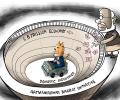
The Indian economy is on the path of a durable recovery on the back of conducive monetary and credit conditions, the global headwinds notwithstanding, said a Reserve Bank of India (RBI) article on the state of the economy. Domestically, there have been several positives on the COVID-19 front, in terms of reduced infections and faster vaccinations, the article published in the RBI Bulletin November 2021 added. The Indian economy, the article said, is clearly differentiating itself from the global situation, which is marred by supply disruptions, stubborn inflation and surges of infections in various parts of the world.

Lower revenue collection puts upward pressure on government borrowing, ensuring that it deviates from the glided path of debt reduction

Government and Reserve Bank to take steps to arrest the fall of the currency.

The Reserve Bank of India is slated to announce its monetary policy review on January 29, amid industry demand for lowering of interest rates to spur growth.

The majority view remains for the central bank to leave the cash reserve ratio unchanged at 4 per cent.

Budget clearly prioritised growth over fiscal consolidation, said Atsi Sheth, Senior VP, Moody's Investors Service.


To make possible discretionary spending including capex and that on welfare, the government decided to borrow more than planned in FY21 -- Rs 12.7 trillion.
Financial shares and auto stocks among the top gainers for the day

The rates, on net calorific value (NCV) basis, dropped to $ 5.05 per mmBtu for six month period beginning April 1, 2015.
Trai's decision to reduce the rates of ADC after due consultation would pave the path for lower telecom tariffs, sustained growth, while reduction in rate of ADC on international calls would reduce arbitrage.

Exports increased by 10.6 per cent in the first quarter of 2014-15 to $81.7 billion. Imports moderated by 6.5 per cent to $116.4 billion. The CAD, which is the difference between the inflow and outflow of foreign currency, had touched a record high of $ 87.8 billion (4.8 per cent) in 2012-13 fiscal mainly on account of steep increase in gold imports.

"The Monetary Policy Committee recognises that there is monetary policy space for future action. However, given the evolving growth-inflation dynamics, the MPC felt it appropriate to take a pause at this juncture," the RBI said in its fifth bi-monthly monetary policy for this fiscal.

The budget has strong growth impulses and response of the economy is positive.
Seeking to dispel fears over the state of economy, Finance Minister P Chidambaram on Thursday said the country will return to high growth of 7 per cent in two years and promised adequate public spending to stimulate it.
State-owned Bharat Sanchar Nigam has challenged a massive reduction in fee paid to it by private operators, saying its rural operations would be severely hit as a result.\n\n

Why India is an attractive investment destination
An international seminar on accounting practices opened on Monday with Finance Commission chairman C Rangarajan asking the government to ensure better expenditure control for containing fiscal deficit.\n\n\n\n
Long distance rates are likely to see massive reduction with Bharat Sanchar Nigam all set to announce fresh rates under the uniform STD tariffs

The government's plans to reign in petroleum subsidies to plug the fiscal deficit next financial year are in jeopardy, as a whopping Rs 2.13 lakh-crore revenue loss is expected at the current levels of global crude oil prices and domestic retail prices of controlled products.

It is not easy to be positive on Indian economy. But it is worth a try to do so this festive season thanks the positive developments of the recent past.
An effort by President Barack Obama played a key role in returning him to the White House for another stint.

How should one billion Indians, for whom deprivation has become an inescapable way of life, join us in celebrating 75 years of Independence? And where do we go from here? asks Kalyan Singhal.
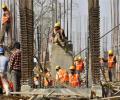
India's economy has bounced back amazingly from the Covid-19 pandemic and nationwide lockdown over the last one year, but it is not out of the woods yet, according to the World Bank, which in its latest report has predicted that the country's real GDP growth for fiscal year 21/22 could range from 7.5 to 12.5 per cent.

The rupee came under pressure on demand from importers as the dollar strengthened overseas.

After a delayed start, the monsoon is advancing steadily.

Gold, forex assets, IT sector, pharma. Devangshu Datta explains why each of these is a good hedge against market shocks at this time.

With the creation of the state of Telangana, additions were made to ToRs of the 14th Finance Commission to make recommendations for the newly created states after the reorganisation of Andhra Pradesh.

Prime Minister Manmohan Singh said he wanted reduction in the fiscal and revenue deficits, an increase in public investment, and cuts on wasteful subsidies.

'Do some profit booking and bring your equity allocation back to its original level.'

'The Budget that Mr Jaitley will present on February 29 will be crucial.'

India's foreign reserves continue to march to record highs, touching USD 393 billion early this month backed by strong foreign portfolio and investment flows, according to Development Bank of Singapore.

Two members recommended bringing down the rate by 50 bps in the April policy.

Nobody bothered to articulate the upsides; instead, the four-year tour of duty and denial of life-long pensions got played up.
Job-seekers for government and related opportunities found that their future was at risk, points out Shreekant Sambrani.

The government and the Reserve Bank had also imposed certain other restrictions on its shipments, including linking of imports to exports to prevent outgo of the foreign exchange.

The future looks somewhat bright for the Indian pharmaceutical industry which is wholly into generics. It expects to get a push from the new US legislation bringing into the health-care fold 32 million or 10 per cent of the country's population which is currently uninsured.

The move is aimed at cutting the fiscal deficit, which the government wants to contain at 4.1 per cent of GDP.
